Buy botanicactus.com ?
We are moving the project
botanicactus.com .
Are you interested in purchasing the domain
botanicactus.com ?
domain@kv-gmbh.de · 0541-91531010
Buy botanicactus.com ?
What is a pendulum in physics?
A pendulum in physics is a weight suspended from a pivot so that it can swing freely. The motion of a pendulum is governed by the force of gravity and the length of the pendulum. Pendulums are used in physics to demonstrate principles of oscillation, such as periodic motion and the conservation of energy. They are also used in timekeeping devices like clocks and metronomes. **
What is the pendulum experiment in physics?
The pendulum experiment in physics involves studying the motion of a pendulum, which is a weight suspended from a pivot so that it can swing freely. By measuring the time it takes for the pendulum to complete one full swing (its period) and the length of the pendulum, physicists can investigate the relationship between the period and the length of the pendulum. This experiment helps to demonstrate the principles of simple harmonic motion and can be used to calculate the acceleration due to gravity. It is a classic experiment that is often used to teach students about oscillatory motion and the laws of physics governing it. **
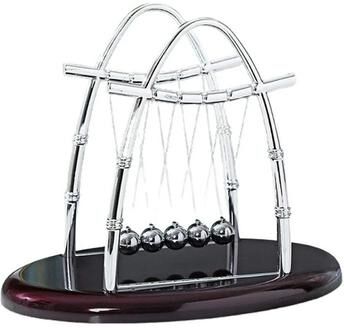

Similar search terms for Creative-Physics-Balance-Pendulum
Top-Angebote
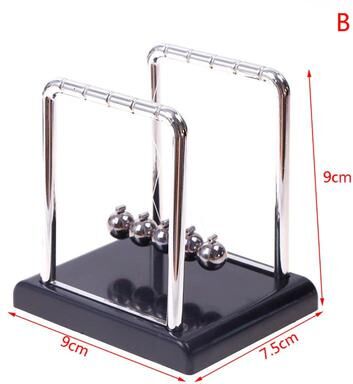
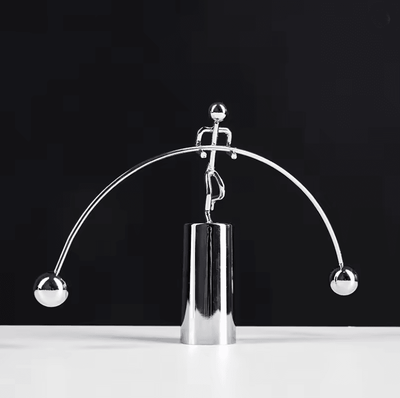
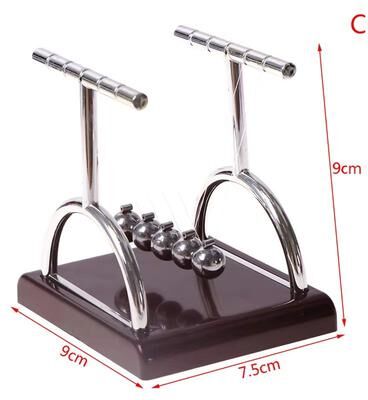
Products related to Creative-Physics-Balance-Pendulum:
-
Inspire Essentials Newtons Cradle Desk Decor Metal Balance Ball Physics Pendulum Toy bAdd a touch of calm focus and timeless curiosity to your space with this newtons cradle desk toy designed to blend science and style. With each gentle swing, it creates a soothing rhythm that captures attention and sparks fascination. Perfect for...59,50 $*Shipping: 0,00 $Secure redirect to the provider
-
Inspire Essentials ZenMotion Creative Balance Pendulum large Single FootDiscover the art of calm and curiosity with the creative balance pendulum that turns motion into mesmerizing relaxation. This Newtons physics pendulum combines science, design, and mindfulness in one elegant piece a soothing display of perpetual...42,48 $*Shipping: 0,00 $Secure redirect to the provider
-
Uplifted Finds Newtons Cradle Balance Ball Kinetic Steel Pendulum Desk Toy Physics Science Gift For Home & Executive Office Newtons Cradle Balance Ball Kinetic Steel Pendulum Desk Toy Physics Science Gift For Home & Executive Office"Ignite the laws of motion in your workspace with our Newton's Cradle Balance Steel Ball. This premium gravity pendulum is the ultimate designer solution for creating a ""FocusSanctuary"" or ""ModernIndustrial"" atmosphere in any home. Featuring..."34,97 $*Shipping: 0,00 $Secure redirect to the provider
-
Inspired Finds Newton's Cradle Metal Pendulum Desk Toy Physics Balance Ball Decor wooden Base ExecutiveAdd a timeless blend of science and style to your workspace with this Newtons cradle desk toy thats as fascinating as it is decorative. Featuring polished steel balls suspended in a sleek frame, this metal pendulum ball creates a rhythmic motion...45,99 $*Shipping: 0,00 $Secure redirect to the provider

-
What does the symbol in physics represent for a pendulum?
In physics, the symbol for a pendulum typically represents the length of the pendulum arm. This symbol is usually denoted by the letter 'L' in equations related to pendulum motion. The length of the pendulum arm is a crucial factor in determining the period of the pendulum's oscillation, as longer pendulums have longer periods and vice versa. The symbol 'L' helps physicists quantify and analyze the behavior of pendulums in various situations. **
-
Can you tell me something about the pendulum in physics?
Sure! In physics, a pendulum is a weight suspended from a pivot so that it can swing freely. The motion of a pendulum is governed by the force of gravity and the restoring force of the pendulum's string or rod. The period of a pendulum (the time it takes to complete one full swing) is determined by its length and the acceleration due to gravity. Pendulums are used in various applications, such as timekeeping devices like grandfather clocks and metronomes, as well as in scientific experiments to study oscillatory motion and gravitational forces. **
-
What is your question about the simple pendulum in physics?
My question about the simple pendulum in physics is how the period of the pendulum is affected by different factors such as the length of the string, the mass of the bob, and the angle of displacement. I am also interested in understanding the relationship between the period of the pendulum and the gravitational acceleration. Additionally, I would like to explore the concept of damping and how it affects the motion of the pendulum. **
-
What is the energy balance in physics?
In physics, energy balance refers to the principle that energy cannot be created or destroyed, only transferred or converted from one form to another. This principle is based on the law of conservation of energy, which states that the total energy in a closed system remains constant over time. Energy balance is essential in understanding various physical phenomena, such as the motion of objects, chemical reactions, and thermal processes. By analyzing the energy balance in a system, physicists can predict and explain how energy is transferred and transformed within that system. **

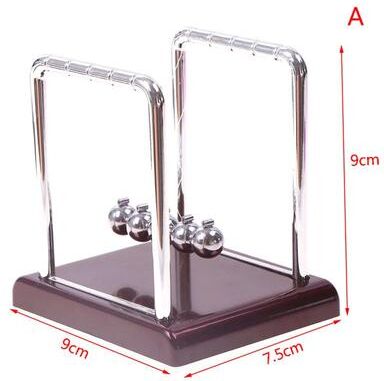
What is the oscillation period of a spring pendulum in physics?
The oscillation period of a spring pendulum in physics is the time it takes for the pendulum to complete one full cycle of motion, from its starting point, through its maximum displacement in one direction, back to its starting point, and then through its maximum displacement in the opposite direction, and back to its starting point again. The oscillation period of a spring pendulum is determined by the mass of the pendulum, the spring constant of the spring, and the length of the pendulum. It can be calculated using the formula T = 2π√(m/k), where T is the period, m is the mass, and k is the spring constant. **
How do you calculate the period of a pendulum in physics?
The period of a pendulum can be calculated using the formula T = 2π√(L/g), where T is the period, L is the length of the pendulum, and g is the acceleration due to gravity. This formula is derived from the equation of motion for a simple pendulum. By plugging in the values for L and g, the period of the pendulum can be determined. This formula shows that the period of a pendulum is independent of the mass of the pendulum bob, making it a useful tool for measuring the acceleration due to gravity. **
Top-Angebote
Products related to Creative-Physics-Balance-Pendulum:
-
Uplift Picks Metal Newtons Cradle Pendulum Desk Toy Educational Physics Balance Balls Metal Newtons Cradle Pendulum Desk Toy Educational Physics Balance BallsBring science to life right on your desk with this classic Newtons cradle desk toy that blends education and relaxation. Featuring polished steel balls suspended in perfect balance, this metal pendulum balance ball demonstrates the principles of...52,98 $*Shipping: 0,00 $Secure redirect to the provider
-
Inspire Curations Newtons Cradle Steel Balance Desk Toy Classic Physics Pendulum Decor Newtons Cradle Steel Balance Desk Toy Classic Physics Pendulum DecorBring motion, focus, and timeless curiosity to your workspace with this iconic Newtons cradle desk toy. Designed for both learning and relaxation, this elegant piece demonstrates the fascinating laws of physics while doubling as a stylish decor...40,00 $*Shipping: 0,00 $Secure redirect to the provider
-
Inspire Essentials Newtons Cradle Desk Decor Metal Balance Ball Physics Pendulum Toy bAdd a touch of calm focus and timeless curiosity to your space with this newtons cradle desk toy designed to blend science and style. With each gentle swing, it creates a soothing rhythm that captures attention and sparks fascination. Perfect for...59,50 $*Shipping: 0,00 $Secure redirect to the provider
-
Inspire Essentials ZenMotion Creative Balance Pendulum large Single FootDiscover the art of calm and curiosity with the creative balance pendulum that turns motion into mesmerizing relaxation. This Newtons physics pendulum combines science, design, and mindfulness in one elegant piece a soothing display of perpetual...42,48 $*Shipping: 0,00 $Secure redirect to the provider
-
What is a pendulum in physics?
A pendulum in physics is a weight suspended from a pivot so that it can swing freely. The motion of a pendulum is governed by the force of gravity and the length of the pendulum. Pendulums are used in physics to demonstrate principles of oscillation, such as periodic motion and the conservation of energy. They are also used in timekeeping devices like clocks and metronomes. **
-
What is the pendulum experiment in physics?
The pendulum experiment in physics involves studying the motion of a pendulum, which is a weight suspended from a pivot so that it can swing freely. By measuring the time it takes for the pendulum to complete one full swing (its period) and the length of the pendulum, physicists can investigate the relationship between the period and the length of the pendulum. This experiment helps to demonstrate the principles of simple harmonic motion and can be used to calculate the acceleration due to gravity. It is a classic experiment that is often used to teach students about oscillatory motion and the laws of physics governing it. **
-
What does the symbol in physics represent for a pendulum?
In physics, the symbol for a pendulum typically represents the length of the pendulum arm. This symbol is usually denoted by the letter 'L' in equations related to pendulum motion. The length of the pendulum arm is a crucial factor in determining the period of the pendulum's oscillation, as longer pendulums have longer periods and vice versa. The symbol 'L' helps physicists quantify and analyze the behavior of pendulums in various situations. **
-
Can you tell me something about the pendulum in physics?
Sure! In physics, a pendulum is a weight suspended from a pivot so that it can swing freely. The motion of a pendulum is governed by the force of gravity and the restoring force of the pendulum's string or rod. The period of a pendulum (the time it takes to complete one full swing) is determined by its length and the acceleration due to gravity. Pendulums are used in various applications, such as timekeeping devices like grandfather clocks and metronomes, as well as in scientific experiments to study oscillatory motion and gravitational forces. **
Similar search terms for Creative-Physics-Balance-Pendulum
-
Uplifted Finds Newtons Cradle Balance Ball Kinetic Steel Pendulum Desk Toy Physics Science Gift For Home & Executive Office Newtons Cradle Balance Ball Kinetic Steel Pendulum Desk Toy Physics Science Gift For Home & Executive Office"Ignite the laws of motion in your workspace with our Newton's Cradle Balance Steel Ball. This premium gravity pendulum is the ultimate designer solution for creating a ""FocusSanctuary"" or ""ModernIndustrial"" atmosphere in any home. Featuring..."34,97 $*Shipping: 0,00 $Secure redirect to the provider
-
Inspired Finds Newton's Cradle Metal Pendulum Desk Toy Physics Balance Ball Decor wooden Base ExecutiveAdd a timeless blend of science and style to your workspace with this Newtons cradle desk toy thats as fascinating as it is decorative. Featuring polished steel balls suspended in a sleek frame, this metal pendulum ball creates a rhythmic motion...45,99 $*Shipping: 0,00 $Secure redirect to the provider
-
The Handy Homestead Newton Pendulum Ball Balance Desk Decor Physics Toy With Moving Metal Balls M1Bring a touch of science, style, and relaxation to your space with this fascinating Newton Pendulum Ball Balance. Designed as both a learning tool and elegant decoration, this physics toy creates a mesmerizing motion display while showcasing the...30,00 $*Shipping: 0,00 $Secure redirect to the provider
-
Inspire Essentials Newtons Cradle Desk Decor Metal Balance Ball Physics Pendulum Toy aAdd a touch of calm focus and timeless curiosity to your space with this newtons cradle desk toy designed to blend science and style. With each gentle swing, it creates a soothing rhythm that captures attention and sparks fascination. Perfect for...59,50 $*Shipping: 0,00 $Secure redirect to the provider
-
What is your question about the simple pendulum in physics?
My question about the simple pendulum in physics is how the period of the pendulum is affected by different factors such as the length of the string, the mass of the bob, and the angle of displacement. I am also interested in understanding the relationship between the period of the pendulum and the gravitational acceleration. Additionally, I would like to explore the concept of damping and how it affects the motion of the pendulum. **
-
What is the energy balance in physics?
In physics, energy balance refers to the principle that energy cannot be created or destroyed, only transferred or converted from one form to another. This principle is based on the law of conservation of energy, which states that the total energy in a closed system remains constant over time. Energy balance is essential in understanding various physical phenomena, such as the motion of objects, chemical reactions, and thermal processes. By analyzing the energy balance in a system, physicists can predict and explain how energy is transferred and transformed within that system. **
-
What is the oscillation period of a spring pendulum in physics?
The oscillation period of a spring pendulum in physics is the time it takes for the pendulum to complete one full cycle of motion, from its starting point, through its maximum displacement in one direction, back to its starting point, and then through its maximum displacement in the opposite direction, and back to its starting point again. The oscillation period of a spring pendulum is determined by the mass of the pendulum, the spring constant of the spring, and the length of the pendulum. It can be calculated using the formula T = 2π√(m/k), where T is the period, m is the mass, and k is the spring constant. **
-
How do you calculate the period of a pendulum in physics?
The period of a pendulum can be calculated using the formula T = 2π√(L/g), where T is the period, L is the length of the pendulum, and g is the acceleration due to gravity. This formula is derived from the equation of motion for a simple pendulum. By plugging in the values for L and g, the period of the pendulum can be determined. This formula shows that the period of a pendulum is independent of the mass of the pendulum bob, making it a useful tool for measuring the acceleration due to gravity. **
* All prices are inclusive of VAT and, if applicable, plus shipping costs. The offer information is based on the details provided by the respective shop and is updated through automated processes. Real-time updates do not occur, so deviations can occur in individual cases. ** Note: Parts of this content were created by AI.