Buy botanicactus.com ?
We are moving the project
botanicactus.com .
Are you interested in purchasing the domain
botanicactus.com ?
domain@kv-gmbh.de · 0541-91531010
Buy botanicactus.com ?
What is the difference between stimulus discrimination and stimulus generalization?
Stimulus discrimination refers to the ability to differentiate between similar stimuli and respond differently to each one. This means that an individual can identify specific differences between stimuli and respond accordingly. On the other hand, stimulus generalization occurs when a response that was originally elicited by a specific stimulus is also produced in the presence of a similar, but not identical, stimulus. In this case, the individual is unable to distinguish between the original stimulus and the similar one, leading to a generalized response. **
Is tasting a stimulus?
Tasting is not considered a stimulus itself, but rather a sensory experience that occurs in response to a stimulus. The stimulus for tasting is the food or drink that comes into contact with taste receptors on the tongue, which then send signals to the brain to interpret the taste. Therefore, tasting is the result of a stimulus, rather than being the stimulus itself. **

Similar search terms for Stimulus
Top-Angebote
Products related to Stimulus:
-
HomeDecorAndMore LLC Boho Cacti Tapestry Boho Cacti TapestryLooking for a stunning wall decor to liven up your large blank wall This boho cactus tapestry is just what you need. Featuring a breathtaking watercolor print of cacti, this tapestry brings the captivating beauty and free spirit of the desert into...39,97 $*Shipping: 0,00 $Secure redirect to the provider
-
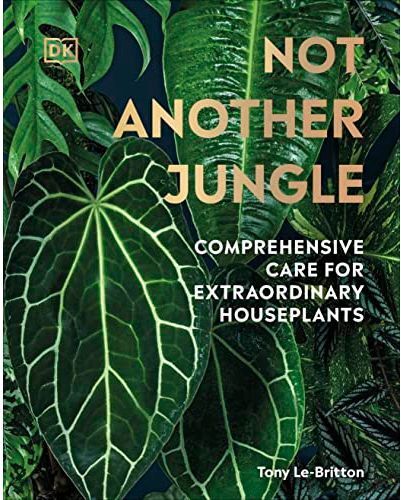
DK Not Another Jungle Comprehensive Care for Extraordinary HouseplantsObsessed with houseplants? You've come to the right place. This isn't any ordinary houseplant book. In fact, there is nothing ordinary about these extraordinary plants. From growing his own collection, Tony Le-Britton of Not Another Jungle, shows you how to grow and care for the world's most sought after plants. Detailed chapters on light, water, humidity, fertilizer, variegation, propagation, and pests and diseases have you covered so you can confidently care for all your houseplants. Understanding their natural habitats empowers you to create the optimum environment in your own home so your plants will thrive. Combining detailed care advice and stunning imagery on a wide range of plants, including Monstera and Anthurium, with a special focus on desirable and unusual varietiesIf you're intent on becoming a devoted plant parent this year, dive straight in to discover:- Step-by-step advice on everything you need to know to grow and care for houseplants. - Information on variegated plant varieties for which there is currently huge interest. - Stunning inspirational and step-by-step photography. - Illustrations explain scientific information on plant anatomy. - Explains how to source plants sustainablyAll the plants featured are available internationally and can be acquired by US readers (many plants have their origins in South America or Asia). Wonder at the natural world with Not Another Jungle and curate and care for your own incredible collection of happy, healthy houseplants.14,99 £*Shipping: 2,99 £Secure redirect to the provider



-
What is a stimulus?
A stimulus is any event or situation that evokes a response from an organism. It can be a physical object, sound, smell, taste, or any other form of input that triggers a reaction. In psychology, a stimulus is used to study how organisms perceive and respond to their environment. It plays a crucial role in understanding behavior and learning processes. **
-
What is an inadequate stimulus?
An inadequate stimulus is a stimulus that is not strong enough to evoke a response from a particular receptor or system. This means that the stimulus does not have the necessary intensity or specificity to trigger a reaction. In the context of sensory systems, an inadequate stimulus may not be able to activate the relevant sensory receptors or nerve pathways to generate a response. This concept is important in understanding how different stimuli can elicit different responses in biological systems. **
-
What are economic stimulus measures?
Economic stimulus measures are policies implemented by governments to boost economic activity during times of recession or slow growth. These measures can include tax cuts, increased government spending on infrastructure projects, and monetary policies such as lowering interest rates. The goal of these measures is to stimulate consumer spending, business investment, and overall economic growth. By injecting money into the economy, these measures aim to create jobs, increase demand for goods and services, and ultimately improve the overall economic outlook. **
-
What is an adequate stimulus?
An adequate stimulus is the specific form of energy or signal that a sensory receptor is designed to detect and respond to. It is the type of input that a sensory receptor is most sensitive to and will produce the strongest response from. For example, the adequate stimulus for the visual system is light, for the auditory system is sound waves, and for the olfactory system is specific chemical molecules. The concept of adequate stimulus helps to explain how different sensory systems are specialized to detect and process specific types of information from the environment. **

What is a non-adequate stimulus?
A non-adequate stimulus is a stimulus that does not elicit a response from a particular sensory receptor or system. In other words, it is a stimulus that does not match the specific type of input that a sensory receptor is designed to detect and respond to. For example, shining a light on the skin would not elicit a response from a taste receptor, making light a non-adequate stimulus for taste perception. **
How are different stimulus intensities transmitted?
Different stimulus intensities are transmitted through a process called sensory transduction. When a stimulus is detected by sensory receptors, such as photoreceptors in the eyes or mechanoreceptors in the skin, it triggers a response that is proportional to the intensity of the stimulus. This response can be in the form of increased frequency of action potentials in sensory neurons or the recruitment of more sensory receptors to respond to higher intensities. The sensory neurons then transmit this information to the brain, where the intensity of the stimulus is encoded and processed. **
Top-Angebote
Products related to Stimulus:
-
Uplifted Finds Multi Stimulus Feather Wand Collection Multi Stimulus Feather Wand CollectionMaximize your pets agility with the MultiStimulus Interaction Kit, an 11piece engagement system engineered with variableflight logic. This professionalgrade set features a telescopic wand architecture paired with multiple interchangeable...38,97 $*Shipping: 0,00 $Secure redirect to the provider
-
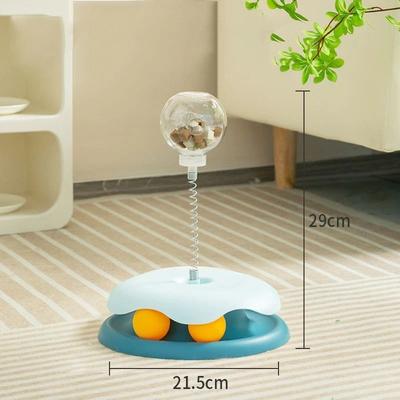
Uplifted Finds Kinetic Slow Food Multi Stimulus Station blueElevate your pets physical and mental engagement with the KineticSlow Food Station, a highperformance enrichment tool engineered with dualmode stimulation logic. This hybrid system combines a gravitationalflow treat dispenser with an orbital...55,97 $*Shipping: 0,00 $Secure redirect to the provider
-
HomeDecorAndMore LLC Boho Cacti Tapestry Boho Cacti TapestryLooking for a stunning wall decor to liven up your large blank wall This boho cactus tapestry is just what you need. Featuring a breathtaking watercolor print of cacti, this tapestry brings the captivating beauty and free spirit of the desert into...39,97 $*Shipping: 0,00 $Secure redirect to the provider
-
DK Not Another Jungle Comprehensive Care for Extraordinary HouseplantsObsessed with houseplants? You've come to the right place. This isn't any ordinary houseplant book. In fact, there is nothing ordinary about these extraordinary plants. From growing his own collection, Tony Le-Britton of Not Another Jungle, shows you how to grow and care for the world's most sought after plants. Detailed chapters on light, water, humidity, fertilizer, variegation, propagation, and pests and diseases have you covered so you can confidently care for all your houseplants. Understanding their natural habitats empowers you to create the optimum environment in your own home so your plants will thrive. Combining detailed care advice and stunning imagery on a wide range of plants, including Monstera and Anthurium, with a special focus on desirable and unusual varietiesIf you're intent on becoming a devoted plant parent this year, dive straight in to discover:- Step-by-step advice on everything you need to know to grow and care for houseplants. - Information on variegated plant varieties for which there is currently huge interest. - Stunning inspirational and step-by-step photography. - Illustrations explain scientific information on plant anatomy. - Explains how to source plants sustainablyAll the plants featured are available internationally and can be acquired by US readers (many plants have their origins in South America or Asia). Wonder at the natural world with Not Another Jungle and curate and care for your own incredible collection of happy, healthy houseplants.14,99 £*Shipping: 2,99 £Secure redirect to the provider
-
What is the difference between stimulus discrimination and stimulus generalization?
Stimulus discrimination refers to the ability to differentiate between similar stimuli and respond differently to each one. This means that an individual can identify specific differences between stimuli and respond accordingly. On the other hand, stimulus generalization occurs when a response that was originally elicited by a specific stimulus is also produced in the presence of a similar, but not identical, stimulus. In this case, the individual is unable to distinguish between the original stimulus and the similar one, leading to a generalized response. **
-
Is tasting a stimulus?
Tasting is not considered a stimulus itself, but rather a sensory experience that occurs in response to a stimulus. The stimulus for tasting is the food or drink that comes into contact with taste receptors on the tongue, which then send signals to the brain to interpret the taste. Therefore, tasting is the result of a stimulus, rather than being the stimulus itself. **
-
What is a stimulus?
A stimulus is any event or situation that evokes a response from an organism. It can be a physical object, sound, smell, taste, or any other form of input that triggers a reaction. In psychology, a stimulus is used to study how organisms perceive and respond to their environment. It plays a crucial role in understanding behavior and learning processes. **
-
What is an inadequate stimulus?
An inadequate stimulus is a stimulus that is not strong enough to evoke a response from a particular receptor or system. This means that the stimulus does not have the necessary intensity or specificity to trigger a reaction. In the context of sensory systems, an inadequate stimulus may not be able to activate the relevant sensory receptors or nerve pathways to generate a response. This concept is important in understanding how different stimuli can elicit different responses in biological systems. **
Similar search terms for Stimulus
-
Frances Lincoln New Wild Garden & RHS Wildlife Gardening 2 Books Collection Set – Gardening Guide CollectionNew Wild Garden Natural-style planting and practicalities By Ian Hodgson & RHS Companion To Wildlife Gardening By Chris Baines 2 Books Collection Set: New Wild Garden: Natural-style planting and practicalities: The New Wild Garden combines new approaches to a more naturalistic design with the practical side of growing wildflowers and shows how to incorporate wildflowers, real meadows and a looser prarie-style planting into gardens and wild spaces.With serious concern into the decline of pollinators and habitats, meadows are currently the focus of enormous creativity. Gardeners, wildlife lovers, professional designers and seed manufacturers are all pushing the envelope of what can be grown, the pictorial effects that can be achieved, and the benefits that this provides for gardeners and wildlife. RHS Companion to Wildlife Gardening: This best-selling book was first published as How to Make a Wildlife Garden, and launched at the 1985 Chelsea Flower Show, making wildlife a mainstream issue for gardeners and the public. Now fully revised and updated by the author, this beautiful new freshly illustrated edition highlights the changes in garden wildlife over the past 35 years.Incorporating RHS research, updated best practice and addressing a multitude of controversial conservation issues, this stunning guide is also a celebration of the rich variety of wild plants and animals that can bring a beautiful garden to life.16,49 £*Shipping: 2,99 £Secure redirect to the provider
-
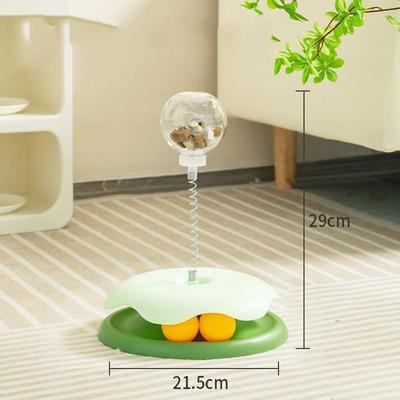
Uplifted Finds Kinetic Slow Food Multi Stimulus Station greenElevate your pets physical and mental engagement with the KineticSlow Food Station, a highperformance enrichment tool engineered with dualmode stimulation logic. This hybrid system combines a gravitationalflow treat dispenser with an orbital...55,97 $*Shipping: 0,00 $Secure redirect to the provider
-
What are economic stimulus measures?
Economic stimulus measures are policies implemented by governments to boost economic activity during times of recession or slow growth. These measures can include tax cuts, increased government spending on infrastructure projects, and monetary policies such as lowering interest rates. The goal of these measures is to stimulate consumer spending, business investment, and overall economic growth. By injecting money into the economy, these measures aim to create jobs, increase demand for goods and services, and ultimately improve the overall economic outlook. **
-
What is an adequate stimulus?
An adequate stimulus is the specific form of energy or signal that a sensory receptor is designed to detect and respond to. It is the type of input that a sensory receptor is most sensitive to and will produce the strongest response from. For example, the adequate stimulus for the visual system is light, for the auditory system is sound waves, and for the olfactory system is specific chemical molecules. The concept of adequate stimulus helps to explain how different sensory systems are specialized to detect and process specific types of information from the environment. **
-
What is a non-adequate stimulus?
A non-adequate stimulus is a stimulus that does not elicit a response from a particular sensory receptor or system. In other words, it is a stimulus that does not match the specific type of input that a sensory receptor is designed to detect and respond to. For example, shining a light on the skin would not elicit a response from a taste receptor, making light a non-adequate stimulus for taste perception. **
-
How are different stimulus intensities transmitted?
Different stimulus intensities are transmitted through a process called sensory transduction. When a stimulus is detected by sensory receptors, such as photoreceptors in the eyes or mechanoreceptors in the skin, it triggers a response that is proportional to the intensity of the stimulus. This response can be in the form of increased frequency of action potentials in sensory neurons or the recruitment of more sensory receptors to respond to higher intensities. The sensory neurons then transmit this information to the brain, where the intensity of the stimulus is encoded and processed. **
* All prices are inclusive of VAT and, if applicable, plus shipping costs. The offer information is based on the details provided by the respective shop and is updated through automated processes. Real-time updates do not occur, so deviations can occur in individual cases. ** Note: Parts of this content were created by AI.