Buy botanicactus.com ?
We are moving the project
botanicactus.com .
Are you interested in purchasing the domain
botanicactus.com ?
domain@kv-gmbh.de · 0541-91531010
Buy botanicactus.com ?
What habitat is the sandy seabed?
The sandy seabed is a habitat found in shallow coastal waters and the deep ocean. It is characterized by a bottom covered in sand particles, with little to no vegetation or coral reefs. This habitat is home to a variety of marine organisms such as sand dollars, flatfish, and certain species of sharks and rays. The sandy seabed provides a substrate for burrowing animals and is an important feeding ground for many species of fish. **
How can one save cacti and succulents at Ikea?
To save cacti and succulents at Ikea, it is important to ensure they are placed in a well-lit area with indirect sunlight. Overwatering should be avoided, as these plants are adapted to survive in dry conditions. It is also recommended to repot them in well-draining soil to prevent root rot. Regularly checking the plants for signs of pests or diseases and addressing any issues promptly can help ensure their health and longevity. **


Similar search terms for Seabed
Top-Angebote
Products related to Seabed:
-
DK Not Another Jungle Comprehensive Care for Extraordinary HouseplantsObsessed with houseplants? You've come to the right place. This isn't any ordinary houseplant book. In fact, there is nothing ordinary about these extraordinary plants. From growing his own collection, Tony Le-Britton of Not Another Jungle, shows you how to grow and care for the world's most sought after plants. Detailed chapters on light, water, humidity, fertilizer, variegation, propagation, and pests and diseases have you covered so you can confidently care for all your houseplants. Understanding their natural habitats empowers you to create the optimum environment in your own home so your plants will thrive. Combining detailed care advice and stunning imagery on a wide range of plants, including Monstera and Anthurium, with a special focus on desirable and unusual varietiesIf you're intent on becoming a devoted plant parent this year, dive straight in to discover:- Step-by-step advice on everything you need to know to grow and care for houseplants. - Information on variegated plant varieties for which there is currently huge interest. - Stunning inspirational and step-by-step photography. - Illustrations explain scientific information on plant anatomy. - Explains how to source plants sustainablyAll the plants featured are available internationally and can be acquired by US readers (many plants have their origins in South America or Asia). Wonder at the natural world with Not Another Jungle and curate and care for your own incredible collection of happy, healthy houseplants.14,99 £*Shipping: 2,99 £Secure redirect to the provider
-
Frances Lincoln New Wild Garden & RHS Wildlife Gardening 2 Books Collection Set – Gardening Guide CollectionNew Wild Garden Natural-style planting and practicalities By Ian Hodgson & RHS Companion To Wildlife Gardening By Chris Baines 2 Books Collection Set: New Wild Garden: Natural-style planting and practicalities: The New Wild Garden combines new approaches to a more naturalistic design with the practical side of growing wildflowers and shows how to incorporate wildflowers, real meadows and a looser prarie-style planting into gardens and wild spaces.With serious concern into the decline of pollinators and habitats, meadows are currently the focus of enormous creativity. Gardeners, wildlife lovers, professional designers and seed manufacturers are all pushing the envelope of what can be grown, the pictorial effects that can be achieved, and the benefits that this provides for gardeners and wildlife. RHS Companion to Wildlife Gardening: This best-selling book was first published as How to Make a Wildlife Garden, and launched at the 1985 Chelsea Flower Show, making wildlife a mainstream issue for gardeners and the public. Now fully revised and updated by the author, this beautiful new freshly illustrated edition highlights the changes in garden wildlife over the past 35 years.Incorporating RHS research, updated best practice and addressing a multitude of controversial conservation issues, this stunning guide is also a celebration of the rich variety of wild plants and animals that can bring a beautiful garden to life.16,49 £*Shipping: 2,99 £Secure redirect to the provider




-
How can one save cacti and succulents from Ikea?
To save cacti and succulents from Ikea, it is important to first ensure they are placed in a well-draining pot with a drainage hole to prevent overwatering. It is also crucial to provide them with adequate sunlight, as cacti and succulents thrive in bright, indirect light. Additionally, it is important to avoid overwatering by allowing the soil to dry out completely between waterings. Regularly inspecting the plants for signs of pests or disease and addressing any issues promptly can also help in saving cacti and succulents from Ikea. **
-
What is the role of phosphate fixation in the self-cleaning mechanism of the seabed?
Phosphate fixation plays a crucial role in the self-cleaning mechanism of the seabed by helping to remove excess nutrients from the water. When phosphate is fixed to sediment particles on the seabed, it becomes less available for algae and other organisms to use for growth. This helps to prevent excessive algal blooms and the subsequent depletion of oxygen in the water, which can harm marine life. By reducing the availability of phosphate, fixation helps to maintain a healthy balance of nutrients in the marine environment and supports the overall health of the ecosystem. **
-
What types of rocks are the black stones found on the seabed in the North Sea?
The black stones found on the seabed in the North Sea are likely to be sedimentary rocks, such as shale or mudstone. These rocks are formed from the accumulation and compression of sediments over time. The dark color of these rocks may be due to the presence of organic matter or minerals like iron sulfide. Additionally, these rocks may also contain fossils, indicating their formation in ancient marine environments. **
-
What types of rocks are the black stones found on the seabed of the North Sea made of?
The black stones found on the seabed of the North Sea are typically made of basalt. Basalt is an igneous rock that forms from the rapid cooling of lava. It is known for its dark color and fine-grained texture. Basalt is commonly found in volcanic regions and is a common rock type in oceanic crust. **

Did the passengers on the lifeboats really hear the wreck hitting the seabed, or was it more the bubbles from the...?
The passengers on the lifeboats did not hear the wreck hitting the seabed. Instead, they heard the bubbles from the sinking ship as it descended into the ocean. The sound of the wreck hitting the seabed would have been too distant and muffled for the passengers to hear from the lifeboats. **
Has the water receded so far back at low tide only at the North Sea that one can only see the seabed?
Yes, the North Sea experiences significant tidal variations, with the water receding far back at low tide, often revealing large expanses of the seabed. This phenomenon is particularly noticeable in areas with shallow gradients, such as the Wadden Sea, where the tide can recede for miles, leaving the seabed exposed. This unique environment supports a diverse range of marine life and is a popular destination for tourists and nature enthusiasts. **
Top-Angebote
Products related to Seabed:
-
HomeDecorAndMore LLC Boho Cacti Tapestry Boho Cacti TapestryLooking for a stunning wall decor to liven up your large blank wall This boho cactus tapestry is just what you need. Featuring a breathtaking watercolor print of cacti, this tapestry brings the captivating beauty and free spirit of the desert into...39,97 $*Shipping: 0,00 $Secure redirect to the provider
-
DK Not Another Jungle Comprehensive Care for Extraordinary HouseplantsObsessed with houseplants? You've come to the right place. This isn't any ordinary houseplant book. In fact, there is nothing ordinary about these extraordinary plants. From growing his own collection, Tony Le-Britton of Not Another Jungle, shows you how to grow and care for the world's most sought after plants. Detailed chapters on light, water, humidity, fertilizer, variegation, propagation, and pests and diseases have you covered so you can confidently care for all your houseplants. Understanding their natural habitats empowers you to create the optimum environment in your own home so your plants will thrive. Combining detailed care advice and stunning imagery on a wide range of plants, including Monstera and Anthurium, with a special focus on desirable and unusual varietiesIf you're intent on becoming a devoted plant parent this year, dive straight in to discover:- Step-by-step advice on everything you need to know to grow and care for houseplants. - Information on variegated plant varieties for which there is currently huge interest. - Stunning inspirational and step-by-step photography. - Illustrations explain scientific information on plant anatomy. - Explains how to source plants sustainablyAll the plants featured are available internationally and can be acquired by US readers (many plants have their origins in South America or Asia). Wonder at the natural world with Not Another Jungle and curate and care for your own incredible collection of happy, healthy houseplants.14,99 £*Shipping: 2,99 £Secure redirect to the provider
-
What habitat is the sandy seabed?
The sandy seabed is a habitat found in shallow coastal waters and the deep ocean. It is characterized by a bottom covered in sand particles, with little to no vegetation or coral reefs. This habitat is home to a variety of marine organisms such as sand dollars, flatfish, and certain species of sharks and rays. The sandy seabed provides a substrate for burrowing animals and is an important feeding ground for many species of fish. **
-
How can one save cacti and succulents at Ikea?
To save cacti and succulents at Ikea, it is important to ensure they are placed in a well-lit area with indirect sunlight. Overwatering should be avoided, as these plants are adapted to survive in dry conditions. It is also recommended to repot them in well-draining soil to prevent root rot. Regularly checking the plants for signs of pests or diseases and addressing any issues promptly can help ensure their health and longevity. **
-
How can one save cacti and succulents from Ikea?
To save cacti and succulents from Ikea, it is important to first ensure they are placed in a well-draining pot with a drainage hole to prevent overwatering. It is also crucial to provide them with adequate sunlight, as cacti and succulents thrive in bright, indirect light. Additionally, it is important to avoid overwatering by allowing the soil to dry out completely between waterings. Regularly inspecting the plants for signs of pests or disease and addressing any issues promptly can also help in saving cacti and succulents from Ikea. **
-
What is the role of phosphate fixation in the self-cleaning mechanism of the seabed?
Phosphate fixation plays a crucial role in the self-cleaning mechanism of the seabed by helping to remove excess nutrients from the water. When phosphate is fixed to sediment particles on the seabed, it becomes less available for algae and other organisms to use for growth. This helps to prevent excessive algal blooms and the subsequent depletion of oxygen in the water, which can harm marine life. By reducing the availability of phosphate, fixation helps to maintain a healthy balance of nutrients in the marine environment and supports the overall health of the ecosystem. **
Similar search terms for Seabed
-
Frances Lincoln New Wild Garden & RHS Wildlife Gardening 2 Books Collection Set – Gardening Guide CollectionNew Wild Garden Natural-style planting and practicalities By Ian Hodgson & RHS Companion To Wildlife Gardening By Chris Baines 2 Books Collection Set: New Wild Garden: Natural-style planting and practicalities: The New Wild Garden combines new approaches to a more naturalistic design with the practical side of growing wildflowers and shows how to incorporate wildflowers, real meadows and a looser prarie-style planting into gardens and wild spaces.With serious concern into the decline of pollinators and habitats, meadows are currently the focus of enormous creativity. Gardeners, wildlife lovers, professional designers and seed manufacturers are all pushing the envelope of what can be grown, the pictorial effects that can be achieved, and the benefits that this provides for gardeners and wildlife. RHS Companion to Wildlife Gardening: This best-selling book was first published as How to Make a Wildlife Garden, and launched at the 1985 Chelsea Flower Show, making wildlife a mainstream issue for gardeners and the public. Now fully revised and updated by the author, this beautiful new freshly illustrated edition highlights the changes in garden wildlife over the past 35 years.Incorporating RHS research, updated best practice and addressing a multitude of controversial conservation issues, this stunning guide is also a celebration of the rich variety of wild plants and animals that can bring a beautiful garden to life.16,49 £*Shipping: 2,99 £Secure redirect to the provider
-
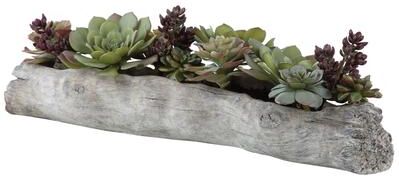
Uttermost Charita Lush SucculentsUttermost's botanicals combine premium quality materials with unique high-style design. With the advanced product engineering and packaging reinforcement, uttermost maintains some of the lowest damage rates in the industry.482,40 $*Shipping: 0,00 $Secure redirect to the provider
-
What types of rocks are the black stones found on the seabed in the North Sea?
The black stones found on the seabed in the North Sea are likely to be sedimentary rocks, such as shale or mudstone. These rocks are formed from the accumulation and compression of sediments over time. The dark color of these rocks may be due to the presence of organic matter or minerals like iron sulfide. Additionally, these rocks may also contain fossils, indicating their formation in ancient marine environments. **
-
What types of rocks are the black stones found on the seabed of the North Sea made of?
The black stones found on the seabed of the North Sea are typically made of basalt. Basalt is an igneous rock that forms from the rapid cooling of lava. It is known for its dark color and fine-grained texture. Basalt is commonly found in volcanic regions and is a common rock type in oceanic crust. **
-
Did the passengers on the lifeboats really hear the wreck hitting the seabed, or was it more the bubbles from the...?
The passengers on the lifeboats did not hear the wreck hitting the seabed. Instead, they heard the bubbles from the sinking ship as it descended into the ocean. The sound of the wreck hitting the seabed would have been too distant and muffled for the passengers to hear from the lifeboats. **
-
Has the water receded so far back at low tide only at the North Sea that one can only see the seabed?
Yes, the North Sea experiences significant tidal variations, with the water receding far back at low tide, often revealing large expanses of the seabed. This phenomenon is particularly noticeable in areas with shallow gradients, such as the Wadden Sea, where the tide can recede for miles, leaving the seabed exposed. This unique environment supports a diverse range of marine life and is a popular destination for tourists and nature enthusiasts. **
* All prices are inclusive of VAT and, if applicable, plus shipping costs. The offer information is based on the details provided by the respective shop and is updated through automated processes. Real-time updates do not occur, so deviations can occur in individual cases. ** Note: Parts of this content were created by AI.